How Much Does a Home Studio Cost in the UK?
UK edition. Written for UK rooms, UK retailers and prices in pounds. The gear reasoning applies anywhere; the dimensions, prices and regulations are UK-specific. Browse all setup guides.
You’ve probably had the same experience we did: you search for what a home studio costs, and every guide that comes back is priced in dollars, recommends gear no UK shop actually stocks, and pictures a spare room roughly twice the size of yours. So here’s the version in pounds, for the sort of room most of us are actually working in.
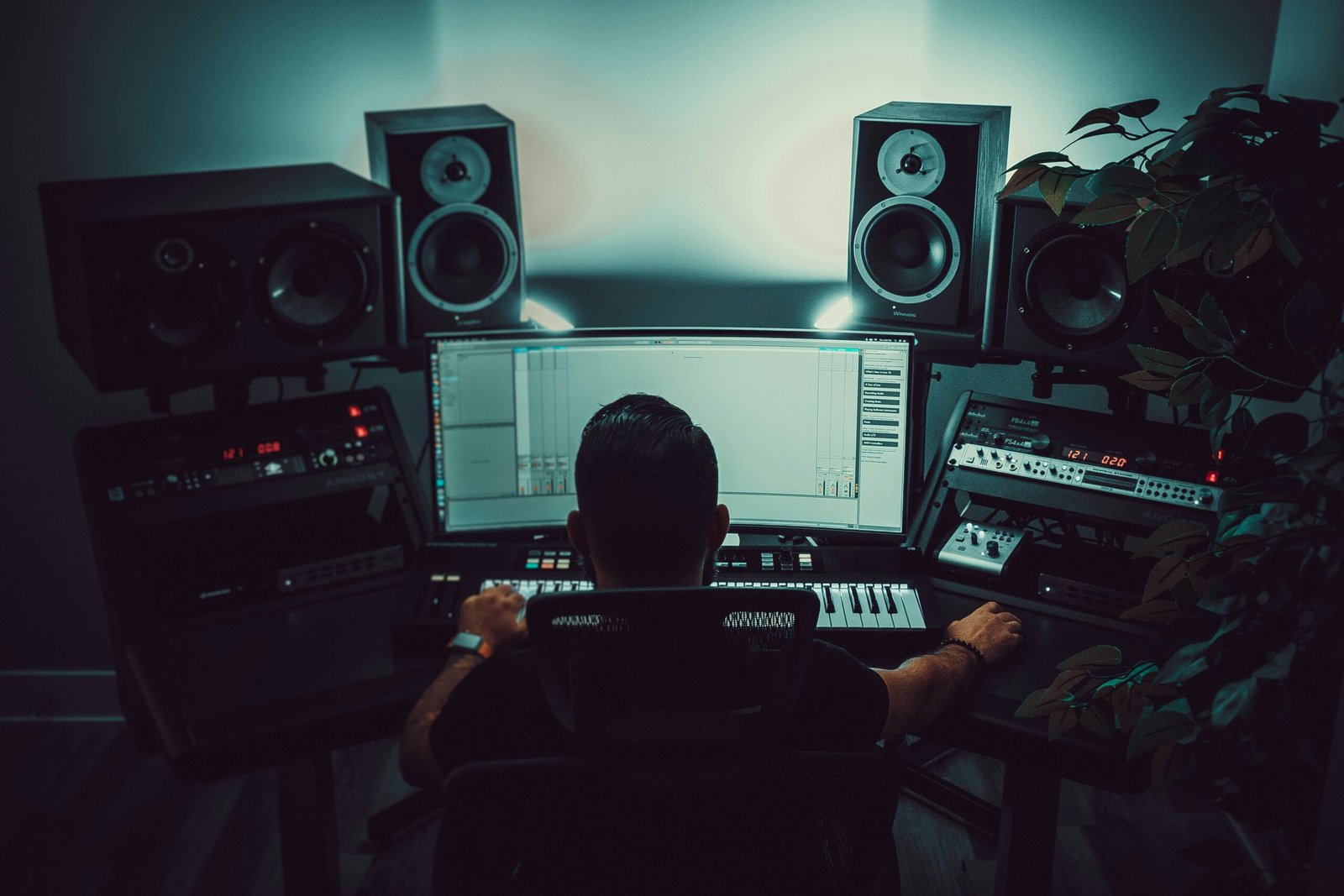
Most home studios look like this, not like a magazine spread. That’s fine.
The short answer
You’ll spend £450 to £900 on a home studio that makes recordings you’d actually release assuming the laptop you already own can run a DAW.
You can go lower. Around £250 still gets you recording, just with more compromises. Go much above £1,500 and you’re mostly buying convenience and extra inputs, not better vocals. And here’s the part no price list will tell you: the thing that most affects how your recordings sound is the room you’re standing in.
What each budget actually buys you
Budgets tend to land in one of three places. The step from the first to the second is the one you’ll actually hear. The step from second to third mostly just makes your life easier.
One USB microphone or a budget interface-and-mic pair, closed-back headphones, a free DAW. Enough to write, demo and release. Mixing decisions will be guesswork because you are monitoring on headphones alone.
XLR microphone into a dedicated interface, a pair of near-field monitors, and critically the first real money spent on treating the room. This is where recordings stop sounding like they were made in a bedroom.
Multi-input interfaces, higher-headroom monitors, outboard preamps, proper broadband absorption and bass trapping. Sonatune, a UK studio-build firm, puts home studio equipment at £1,500–£5,000, separate from acoustic treatment and furniture.
What £750 actually gets spent on
People assume the microphone eats the budget. It doesn’t. Here’s how our recommended build actually splits and the surprise is usually how little the mic costs, and how much the speakers do.
The £90 line is the one worth staring at. Twelve percent of the budget goes on four foam-free absorption panels, and in a normal bedroom that £90 will change your recordings more than spending an extra £300 on the microphone would. It’s the least exciting purchase on the list and comfortably the best value.
Every component, priced in sterling
These come from UK retailer listings and published UK cost guides. Where sources disagreed we’ve shown the wider range rather than splitting the difference, because that spread tells you something honest about the market.
| Component | Entry | Mid | Buy it first? |
|---|---|---|---|
| Audio interface | £109 | £150–£600 | Yes, if using XLR |
| Microphone | £60–£100 | £100–£1,000 | Yes |
| Headphones (closed-back) | £50 | £100–£500+ | Yes |
| Studio monitors (pair) | £200 | £200–£800 | No (defer) |
| DAW software | £0 (free tiers) | £200–£600 | No (start free) |
| Computer | Use existing | £800–£2,000 | No (use what you own) |
| Acoustic treatment | £0 (DIY) | £300–£1,000 | Yes (underrated) |
| Stands, cables, pop filter | £40–£70 | £70–£150 | Yes (always forgotten) |
| Desk & chair | Use existing | £200–£2,000 | No (defer) |
Sources: the interface entry price comes from an idealo UK price-comparison snapshot across 11 retailer offers, taken May 2026, two months older than this page’s July check date, and held by us rather than independently linkable, so treat it as indicative; Select Recording Studios London equipment cost guide, whose microphone, interface, monitor, computer and treatment bands match our table row for row; the London College of Creative Media puts a basic home setup at £250–£500, which corroborates our Starter band independently; Sonatune UK studio build guide, used only for its DAW, headphones and furniture component bands. That guide contradicts itself: it opens by putting a basic home setup at £5,000 and classes home studios at £5,000–£20,000, then itemises its own “Basic Home Studio” worked example to £1,650, so we take its component bands and ignore its totals; Checkatrade puts a basic project studio at £1,100–£4,700, cited here for context rather than for any figure in the table above. Used-market figures on this page are indicative estimates only and are not drawn from a sourced dataset. Prices move. Verify before buying.
Three builds, itemised
Ranges are hard to shop with. So here are three actual baskets you could go and buy this weekend, each assuming you’ve already got a laptop.
The £300 Demo Rig
~£300Enough to write, demo and get tracks up on streaming.
- Entry USB-C audio interface: £109
- Budget large-diaphragm condenser: £70
- Closed-back monitoring headphones: £50
- Boom stand, XLR cable, pop filter: £45
- Duvet-and-corner vocal booth (DIY): £0
- Free DAW tier: £0
The catch: no monitors, so every mix decision is made on headphones. Fine for demos. You will want a second opinion before releasing.
The £750 Release Rig
~£750Where your room and your gear finally stop working against each other.
- Two-input interface: £180
- Dynamic broadcast-style mic: £120
- Reference headphones: £110
- Entry near-field monitors (pair): £200
- Four broadband absorption panels: £90
- Stands, cables, isolation pads: £50
Why this one: a dynamic mic rejects room reflections far better than a condenser, which matters enormously in an untreated UK bedroom. Spending £90 on panels here buys more audible improvement than spending £300 more on the microphone.
The £2,000 Working Room
~£2,000For when you’re recording other people, or working to someone else’s deadline.
- Four-input interface: £400
- Condenser plus dynamic mic pair: £450
- Mid-tier monitors with stands: £550
- Full room treatment inc. bass trapping: £400
- Paid DAW licence: £200
Diminishing returns start here. Beyond roughly £2,000, listeners on earbuds and car speakers will not hear what you spent.
Before you spend anything, move the furniture
This costs nothing and it’s the first thing we’d do in any room. Sing into the soft side of the room, not the hard one, and put something absorbent behind you a duvet on a rail works genuinely well, which is why engineers keep recommending it over foam tiles.
Stand roughly a third of the way into the room rather than dead centre or hard against a wall. Face the absorbent side. Keep the mic between you and the soft surface so reflections land in the duvet instead of bouncing back into the capsule. That’s an afternoon of rearranging and it costs you nothing.
Buying used cuts roughly a quarter off entry gear
Audio gear holds its value unusually well, and that cuts both ways. Selling on is easy; finding a real bargain is harder than you’d hope. The clearest example is the interface most UK beginners start with.
£109
Lowest new UK price across 11 retailer offers
£80
Indicative used asking price (estimate, unsourced)
27%
Approx. saving vs new (indicative)
The used figures above are indicative estimates from general marketplace observation, not a sourced dataset treat them as a rough guide and check current sold listings yourself. The wider point holds regardless: a saving of well under £30 on a £109 item is not, on its own, a compelling reason to give up a warranty.
Where used genuinely pays: monitors, microphones and stands items with no firmware, no driver dependency and few moving parts. Buy interfaces and anything with a USB controller new if you can, because driver support for discontinued models disappears quietly.
The costs nobody budgets for
Four things blow the budget almost every time, and none of them are the fun purchases.
Cables, stands and adapters
Budget £40–£70. It feels like nothing until you discover your interface is USB-C and your laptop is not, on the evening you planned to record.
Acoustic treatment, bought twice
Thin foam tiles are the classic first purchase and they change almost nothing, so proper broadband panels get bought afterwards anyway. UK cost guides put real treatment at £300–£1,000. Skip the foam stage entirely.
Software that renews
A DAW licence runs £200–£600 outright, but many are now sold as rolling subscriptions. Bundled licences shipping with interfaces are frequently time-limited trials rather than perpetual copies. Read the term before you build a workflow on one.
The rented-flat problem
If you cannot drill, permanent panels are out and you are into freestanding absorbers and hung solutions instead typically more expensive per unit of absorption. A pre-built portable vocal booth runs around £400; a DIY MDF-and-foam equivalent around £300.
Straight answers
What is the absolute minimum to record usable vocals?
Around £150: a decent USB microphone, closed-back headphones and a free DAW. It will not sound like a studio, but plenty of released tracks have been recorded this way. The limiting factor will be your room, not your microphone.
Do I need an audio interface if I have a USB microphone?
No. A USB microphone contains its own interface. That is the entire point of the format. You need one only when you move to XLR microphones, want to record two sources at once, or need lower monitoring latency.
Is it cheaper to book a studio instead?
UK studio hire runs roughly £150–£400 per day. So a £750 home setup pays for itself somewhere between the second and fifth session. If you record occasionally and want an engineer’s ears, hire. If you record weekly, build.
Do I need to soundproof my room?
Soundproofing and acoustic treatment are different things, and conflating them is the most expensive mistake in this hobby. Treatment improves how recordings sound and costs hundreds. Soundproofing stops your neighbours hearing you, requires structural work, and costs thousands. Almost everyone reading this needs treatment, not soundproofing.
Condenser or dynamic microphone for a bedroom?
Dynamic, in most untreated UK bedrooms. Condensers are more detailed and more sensitive, which means they capture your room’s reflections just as faithfully as your voice. In a small, hard-surfaced space that works against you.
How we produced these figures
The three budget tiers on this page are built up from the itemised component prices below rather than borrowed from another guide’s totals. Component prices come from live UK retailer listings and a UK price-comparison index covering multiple retailers. Published cost guides are used to corroborate those bands, never to set them, and where they disagree we show the disagreement rather than picking a midpoint. One of the guides we checked contradicts itself by a factor of three, which is precisely why we do not lean on secondary totals.
We have not tested every product referenced here, and we do not claim to have. This is a cost analysis, not a review. Where we describe how gear behaves in a small untreated room, that reflects hands-on experience recording in exactly that kind of space not laboratory measurement.
Prices were checked in July 2026 and will drift. This page is scheduled for review every quarter.
Written by
Paul
Paul started Setupfind after one too many American gear guides priced equipment he could not actually buy here. He works in digital research and SEO, and spends his own time on music production including supporting an independent Afrobeats artist, where a session budget is a real number rather than a hypothetical one.
He is not a studio engineer, and this site does not pretend otherwise. What Setupfind offers is disciplined price research, UK-specific context, and a refusal to recommend anything on the strength of a manufacturer’s press release.
Affiliate disclosure: some links on Setupfind earn us a commission if you buy through them, at no extra cost to you. Commission never determines what we recommend, and we link to retailers that do not pay us where they offer the better price.