Sound people will actually stay for
Listeners forgive a lot. Bad audio is not on the list. They leave within seconds. Here is what to buy, in the order that matters.
properly
its check month
numbers came from

How many people are in the room?
This is the question that decides your whole setup, and it is not about sound quality. Premium USB microphones now reach 24-bit/96kHz conversion and approach budget XLR interface performance, so the connector is a workflow choice.
Just you → USB
~£115 ($155)
- USB microphone: £90 (~$120)
- Desk stand or arm: £25 (~$35)
- No interface needed
- Set up in about two minutes
A USB mic contains its own interface. Buying a separate one adds nothing and usually will not physically connect.
Two of you → XLR
~£430 ($580)
- Two-input interface: £180 (~$245)
- Two dynamic XLR mics: £140 (~$190)
- Stands and cables: £60 (~$80)
- Headphone splitter and second pair: £50 (~$70)
Two USB mics on one computer causes clock drift and driver conflicts. One interface, two inputs, two separate tracks.
Separate tracks are worth more than better microphones. If one host coughs or laughs over an answer, you can repair their track alone. On a single mixed track, whatever you do to one voice you do to both.
Prices are typical UK retail at the time of checking and will vary. Checked July 2026. Dollar figures are converted at £1 = $1.35 (6 August 2026) to give scale, not US retail prices, which differ with sales tax and regional supply.
Your room matters more than your microphone
The most common reason a podcast sounds amateur is not the mic. It is the echo coming back off bare walls. None of the following costs anything.
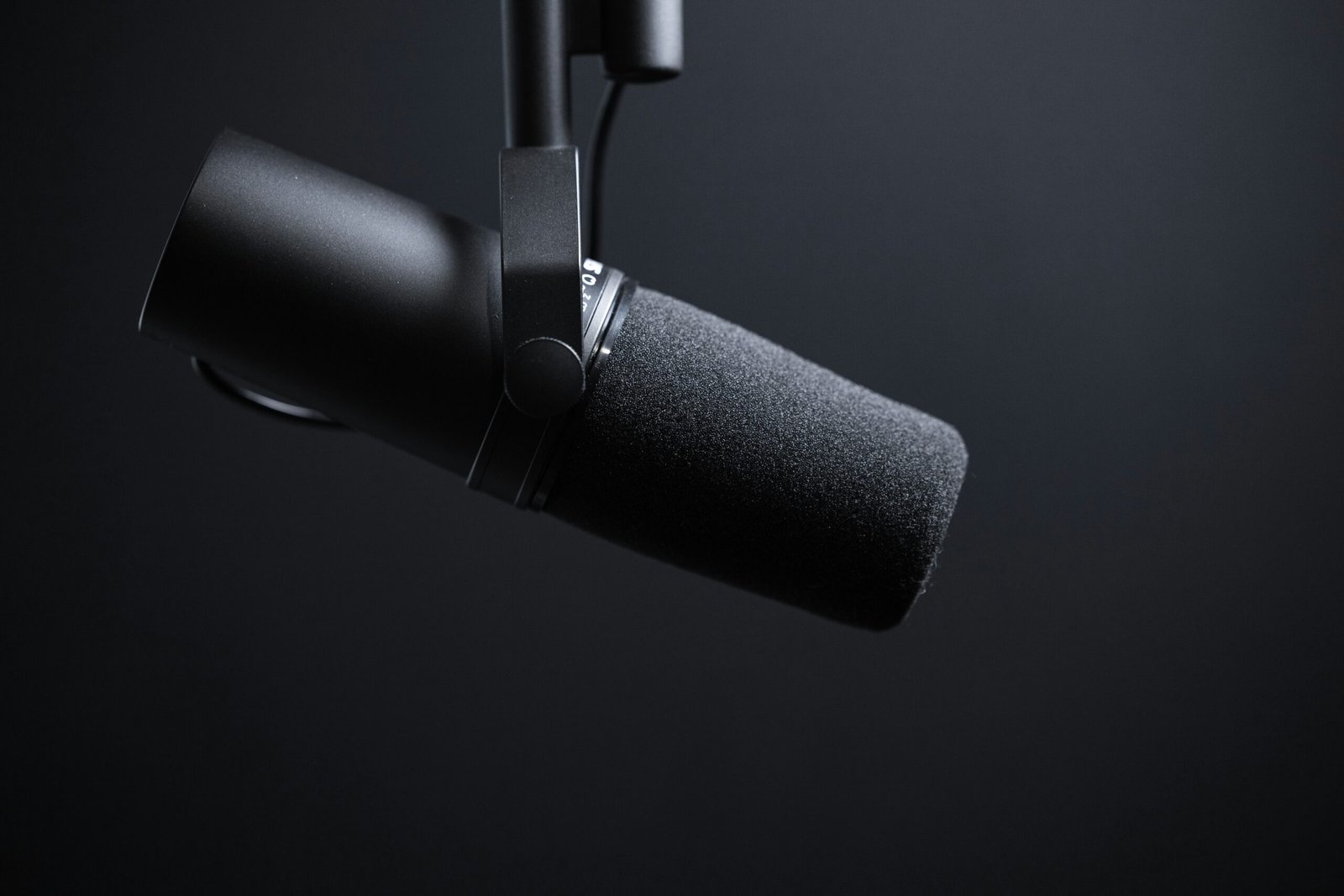
Choose a dynamic microphone
Dynamic mics reject the room far better than condensers. A condenser captures your reflections just as faithfully as your voice, which works against you in any untreated space.
Get closer than feels natural
A hand-span from the mic, speaking slightly across it rather than straight into it. Proximity is the single most effective free change, because the closer you are the less room the mic hears.
Record in the softest room you have
Carpet, curtains, a sofa, a wardrobe of clothes. Kitchens and bathrooms are the worst rooms in any house. A spare bedroom with the wardrobe doors open beats a large empty lounge every time.
Put something soft behind you
A duvet on a curtain rail absorbs across a wider frequency range than the thin foam tiles most beginners buy first. Spacing it an inch or two off the wall extends that lower still.
Treatment is not soundproofing. Treatment changes how your recordings sound and costs tens to hundreds. Soundproofing stops the neighbours hearing you, needs structural work, and costs thousands. Almost everyone reading this needs the first one.
Straight answers
Do I really need an XLR microphone?
Only if you will record more than one person in the room, or want to swap the mic and the interface independently later. For a solo show, a good USB mic is genuinely sufficient and plenty of well-produced podcasts are made on them.
How do I stop my room sounding echoey?
Get closer to the mic, use a dynamic rather than a condenser, and put something soft behind you. Thick curtains, a duvet on a rail and a rug do more than thin foam tiles, and cost nothing if you already own them.
Can two people share one microphone?
You can, but it costs you every editing option. One mic means one track, so you cannot fix one host without affecting the other, and whoever sits further away sounds it.
What about a remote co-host?
Different problem entirely. You each record locally on your own machine and combine the files afterwards, so you both need a one-person setup rather than a shared two-input interface.
Does a more expensive microphone fix bad audio?
Rarely. If your recordings sound thin or echoey, that is mic distance and room reflections. A better microphone in the same room captures the same problems in more detail.
Go deeper on podcast setup
From one host to two, with the channel-count decision explained properly.

XLR vs USB Microphone: Which Should You Actually Buy?
One question decides it, and it is not sound quality.
Read the guide →
Podcast Setup for Two People (UK Gear List)
Why two USB mics fail, and two builds that record each host separately.
Read the guide →
Do I Need an Audio Interface If I Have a USB Mic?
No, and here is exactly why. Plus the six cases where you do need one.
Read the guide →